Hot vs. Cold Slot Machines: The Real Truth
You’ve probably heard it, or said it yourself, while standing at a slot machine: “This one’s cold, it hasn’t paid in forever.” Or maybe it’s, “Keep going – this game’s on fire!”
Talk of “hot” and “cold” slots is part of the air at any casino. Everyone has a theory about hot vs. cold slot machines, and nobody wants to walk away right before the big one hits, or worse, waste time on a machine that’s stuck in a dry spell.
This guide explains what hot and cold slot machines actually are, why the belief persists despite being mechanically false, what genuinely does vary between games and sessions – RTP and volatility – and how to use those real variables to play more intelligently.
What Are Hot and Cold Slot Machines?
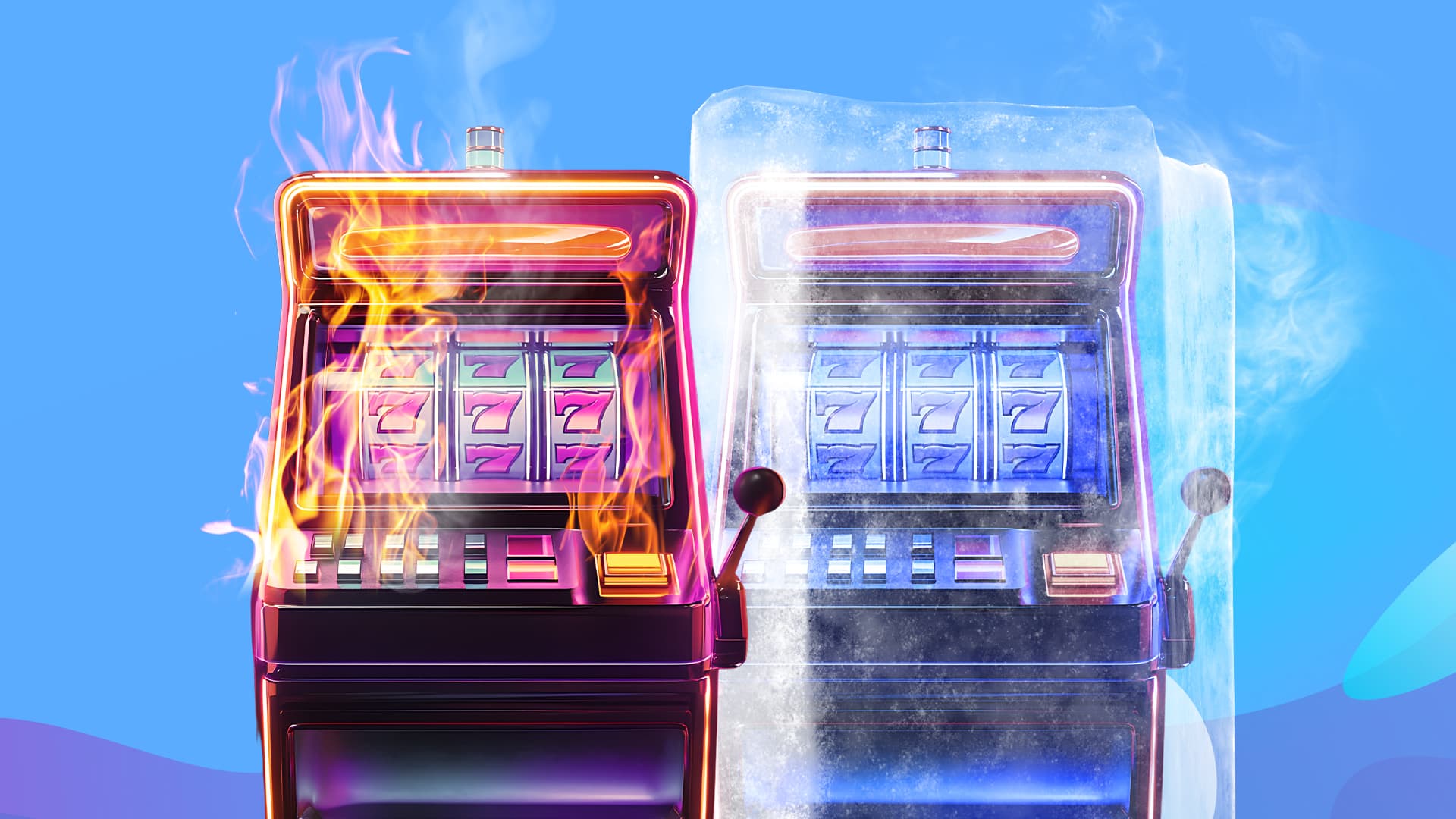
A ‘hot’ slot is one that has paid recently – often several times in quick succession, leaving the player with a feeling that the machine is ‘on a run’.
A ‘cold’ slot is one that has gone quiet for an extended period, leading to the sense that it is withholding wins or is ‘due’ to pay.
The same idea appears under different names. ‘Loose slots’ describes machines players perceive as paying generously. ‘Tight slots’ describes machines perceived as stingy.
In some cultures, specific positions on the casino floor are believed to be programmed to pay more frequently – near the entrance, near high-traffic areas, at specific times of day.
None of these beliefs reflect the actual mechanics of how slot machines work.
Are Hot and Cold Slots a Real Thing or Just a Myth?

Hot and Cold slots are real, but the idea that they will pay out more or less is a myth.
The truth is a lot simpler and far less mysterious.
Every spin on a slot machine is determined by a Random Number Generator (RNG). The RNG is an algorithm that produces a continuous sequence of random numbers at a rate of billions per second.
When you hit spin, the current number in that sequence is used to determine the outcome. The process is:
- Instant: the result is determined before the reels visually settle. The animation you watch is a display effect, not the mechanism of the decision.
- Independent: the result of spin 47 has absolutely no bearing on the result of spin 48. The RNG does not retain any state between spins.
- Audited: RNG systems at licensed casinos are independently tested by organisations like eCOGRA to verify that results are genuinely random and cannot be predicted or influenced by prior outcomes.
There is no temperature. There is no memory. The machine does not know it just paid three times in a row, and it does not know it has been quiet for forty spins. Each spin begins from exactly the same mechanical position as every other spin.
Why do Players Believe in Hot and Cold Machines?
The hot/cold belief is an example of what psychologists call apophenia – the tendency to perceive meaningful patterns in random data.
Your brain is doing exactly what brains evolved to do: find patterns. The problem is that genuinely random sequences contain streaks. A coin flipped 1,000 times will produce runs of heads and runs of tails that feel non-random to an observer. They are not evidence of any underlying pattern.
Confirmation bias plays a big role, too. We have a tendency to lock onto the wins that support what we want to believe, while quietly brushing past the dry spells.
And of course, there’s the lore. Everyone’s heard a tale: someone hit big right after you left, or your cousin swears by the “third machine on the left.” These stories make it feel like the machines have a personality.
None of this is foolish or even your fault! It’s just how we’re wired. But understanding what’s happening means you can play smarter.
Why ‘Slots Due for a Win’ is Wrong
The belief that a run of losses increases the probability of a win on the next spin feels intuitively reasonable: if a slot has gone 50 spins without a significant pay, surely the next spin is more likely to deliver?
The mathematical reality is the opposite of this intuition. Each spin is independent. A 96% RTP game does not track a running total and adjust future results to catch up.
If a game goes 50 spins below its statistical average, that does not increase the probability of win on spin 51. The game has no awareness of the deficit.
Consider a simple example: a coin is flipped and lands heads 10 times in a row. The probability of tails on the 11th flip is still exactly 50%.
The coin has no memory of the previous 10 flips. Slot machines operate under the same principle, scaled to millions of possible outcomes.
Chasing losses on the basis that ‘it must pay soon’ is one of the most expensive mistakes in slot play. The best decision when you have hit your loss limit is to stop – not to continue because the machine ‘owes’ you.
What Actually Varies Between Slot Sessions – RTP and Volatility

Two genuine variables do determine the shape of your session: RTP and volatility.
RTP – Return to Player
RTP is the theoretical percentage of all wagers returned over millions of spins.
A 96% RTP game returns $96 per $100 wagered in the long run. A 93% RTP game returns $93. That 3-percentage-point gap is real and meaningful across extended play. See our RTP guide for a full explanation.
What RTP does not do: it does not predict when wins will arrive within a session. A game with 96% RTP can run 30 spins without a significant win, then deliver multiple wins in five spins.
The average converges to 96% only across a very large sample. Within any individual session, the result can deviate significantly in either direction.
What a long ‘cold streak’ actually tells you: in most cases, it tells you that the game has a high-volatility profile where returns are concentrated into less frequent, larger hits. It tells you very little about what the next spin will produce.
Volatility – The Real Explanation for Streaks
Volatility describes how a slot distributes its mathematical return.
A high-volatility game like Golden Buffalo concentrates returns into less frequent, larger hits – extended dry spells followed by significant multiplier events.
A low-volatility game like Paws of Magic distributes returns as more frequent, smaller wins.
A 30-spin quiet period on a high-volatility slot is not the machine running cold. It is the natural rhythm of a game where returns are designed to arrive less frequently but more substantially.
Top Slots Tip:
When a slot ‘feels cold’ it has almost always not ‘dropped below its RTP’ – it is running high-volatility variance exactly as intended.
The game is not tracking a deficit. It is simply producing random results whose short-run distribution happens to include a quiet period.
Hot Drop Jackpots – The One Genuine Exception
Hot Drop Jackpots at SlotsLV are the one variant where timing genuinely has strategic value – but the reason is entirely different to the hot/cold belief.
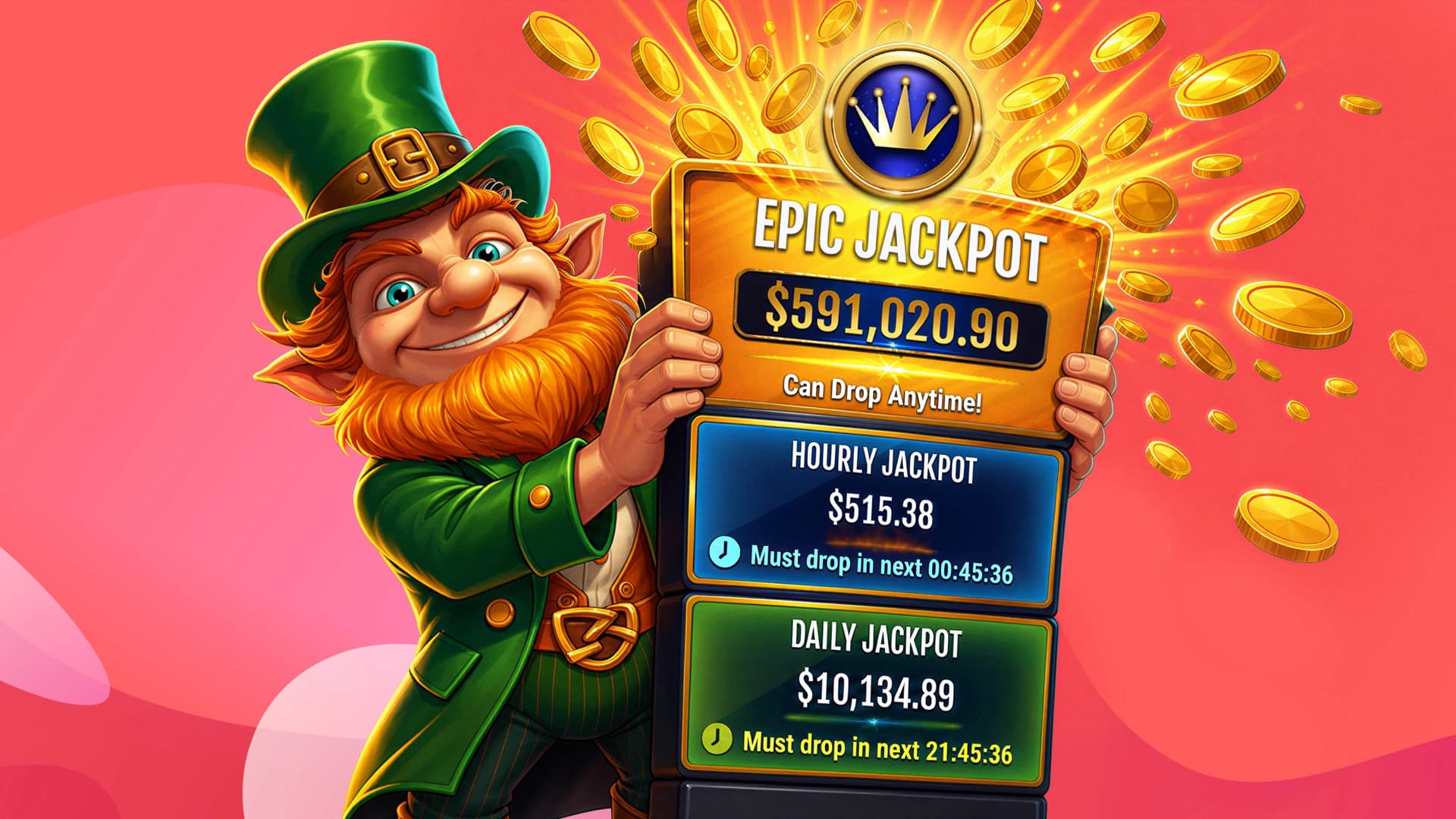
Hot Drop Jackpots run on countdown timers: the Hourly Jackpot must pay at least once per hour, the Daily Jackpot is guaranteed daily, and the Super Jackpot must pay before the overall timer expires.
As any countdown approaches zero, the jackpot must pay. That makes playing closer to the deadline a mathematically justified strategy. See our Hot Drop tips guide for the details.
5 Tips to Play Slots Smarter
- Choose games by RTP and volatility, not perceived temperature. A 96%+ RTP game is a better long-run choice than a 93% game regardless of how either has been performing in the last ten minutes.
- Match volatility to your bankroll. High-volatility games need larger bankrolls relative to stake to survive dry periods. If your budget is $30 and you want 50+ spins, a low-medium volatility game is a better match than a high-variance title.
- Set session limits before you open the game. Our bankroll management guide covers the full 5-step framework for maintaining session control.
- Stop when you hit your loss limit. The 5-spin strategy can provide another simple stopping rule, as long as it is used to manage your session rather than test whether a slot is hot or cold.
- Play for fun, not patterns. That “one more spin” feeling is just that – a feeling. Don’t fall for the hot/cold trap and remember that each spin is totally random.
More Answers about Hot vs. Cold Slot Machines
Do slot machines actually get hot or cold?
Nope, slot machines do not get hot or cold since they run on Random Number Generators, so every spin is totally random. A “hot” or “cold” streak is just how it feels, not fact.
What does ‘loose slots’ mean?
Loose slots is player terminology for machines perceived as paying generously. Tight slots is the opposite. Neither term describes an actual machine state – they are perceptions based on recent experience.
A slot’s actual long-run payout rate is its published RTP, which you can check before you play. A loose-feeling session on a 93% RTP game is still a 93% RTP game.
Is there a best time to play slot machines?
There’s no best time to play slot machines when it comes to winning. Whether it’s midnight on Saturday or your Tuesday lunch break, your odds stay the same.
Pick a time that fits your mood and schedule. The only exception is with Hot Drop Jackpots. These have daily and hourly countdowns, so the closer you play to that 00:00:00 mark (or the Super Jackpot max dollar value), the better your chances of hitting one before it resets.
Can you predict when a slot will hit?
You can’t predict when slots will hit. Slots don’t remember past spins, and there’s no pattern to follow, despite how it might feel.
Hot and Cold Slots – What do You Think?
For us, hot and cold slots might make for fun conversation, but they don’t change the odds.
Thanks to the trusty RNG, every spin is random, no matter what. Instead of chasing streaks, focus on smart strategies, like bankroll management and picking games you enjoy.
The priority is to have fun, and the jackpots are a sweet bonus when they hit.