How Do Paylines and Hit Frequency Work in Slots?
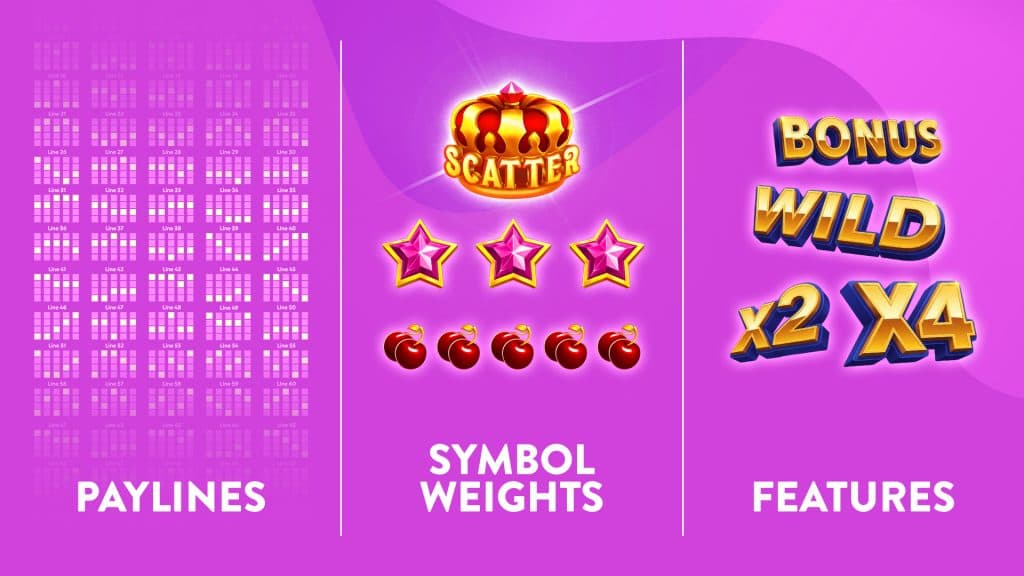
Two numbers shape almost everything about how a slot session feels. Paylines decide which symbol combinations count as wins. Hit frequency measures how often any of them actually land.
Both affect how you read a game, but one does not automatically determine the other. Paylines define where line-based wins can form; hit frequency is a game statistic describing how often winning outcomes occur.
What Are Paylines?
A payline is a preset pattern across the grid. In a line-based game, matching symbols need to land on an active payline for that line win to count. Scatters and other special features can use separate rules, so check the paytable.
There are two styles. Fixed paylines keep the same number of active lines on every spin. Adjustable paylines let you choose how many are active, but whether that changes total stake, prize eligibility or any other setting depends on the game’s wager rules.
What line count does not tell you on its own is RTP, volatility or hit frequency. Those are properties of the game and its configuration, so check the published rules rather than inferring them from the number of lines.
More active lines mean more of that game’s predefined line paths are being evaluated, but that does not create a universal hit-frequency rule across games or configurations.
The payways vs paylines comparison shows how line-based formats differ from ways-to-win systems.
From 1 Payline to 262,144 Ways
The number shown on a slot can describe very different win structures. These examples show the range without implying that more lines or ways mean better odds.
| Slot Game | Win format |
| 7 Fortune Frenzy | 1 payline |
| 10 Times Vegas | 3 paylines |
| 8 Lucky Charms | 50 paylines |
| Burning Cash | Up to 100 adjustable paylines |
| Cat Kingdom | 243 ways to win |
| River of Gold | 117,649 ways to win |
| Western Legends | 262,144 ways to win |
What Is Hit Frequency?
Hit frequency is the percentage of spins that pay you anything at all. A game at 40% hit frequency wins on roughly 40 out of every 100 spins over the long run.
Hit frequency comes from the game’s maths: symbol weighting, Wilds, scatters, bonus rules and the way wins are evaluated all contribute. The number of paylines alone is not enough to calculate it.
Now the catch, and it is an easy one to miss. Hit frequency tells you how often wins land, not how big they are.
A game can pay on 40% of spins and still drain your balance, if most of those wins come in under the cost of the spin. Frequency and value are two completely separate questions.
How Slot Paylines Impact Cost and Hit Rate
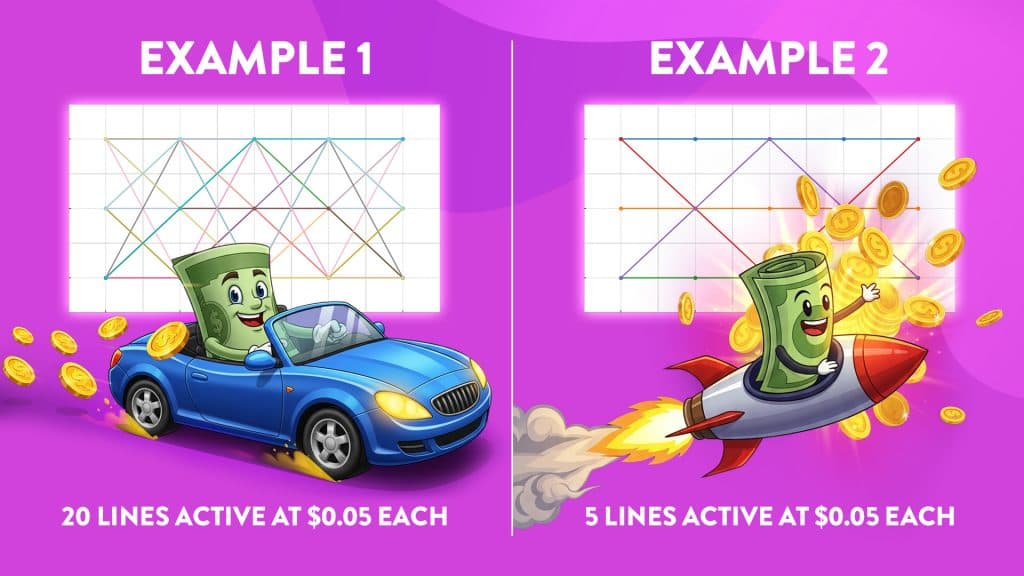
On an adjustable-payline game, changing the active-line count changes which line paths are in play. It may also change the total cost of a spin, but only if that game prices the wager by active line. Check the bet controls and paytable rather than assuming.
Burning Cash is a practical example because it lets you choose 20, 40, 60, 80 or 100 paylines. The useful question is not “which setting has the better hit rate?” but what the game changes when you select fewer or more lines.
- With fewer active lines, fewer of Burning Cash’s predefined payline paths are evaluated. Confirm in the game controls how the stake changes with that setting and whether any prize rules depend on the active-line count.
- With more active lines, more of those predefined paths are evaluated. That still does not let you infer a higher published hit frequency or better RTP without the game’s own maths.
The key point is that active-line count, spin cost and hit frequency are separate questions. One setting may cost more or less depending on the wager controls, but the number of active lines does not by itself tell you how often the game will produce a winning outcome.
Likewise, do not assume RTP is identical across every possible configuration unless the paytable says so. Changing lines does not create a universal way to improve the maths; the game rules determine what each setting changes.
Paylines, Hit Frequency, and Volatility
Hit frequency and volatility get mixed up all the time. Hit frequency describes how often winning outcomes occur; volatility describes how wins are distributed by size and frequency over time.
A game can combine a relatively frequent hit rate with high volatility if many wins are small and much of the payout potential sits in rarer features. Frequent hits do not automatically make a game low volatility.
Which is why payline count alone tells you almost nothing. Check the volatility rating and RTP in the paytable before you decide what each one means.
What to Check Before You Play
Before changing an adjustable-payline setting, check three things in the game itself:
- Confirm whether total stake changes with the number of active lines. Some games price the wager by line; others use a different bet structure.
- Check whether any top prizes, jackpots or symbol payouts require all lines to be active. The paytable will state this if it applies.
- Look for published RTP, hit frequency and volatility data rather than inferring them from line count. Each statistic answers a different question.
Test the Paylines on Your Favourite Slots
Where Practice Play is available, use it to learn how the line controls and bet settings work before staking. The goal is to understand the interface, not to prove a hit-frequency pattern from a short sample.
A short demo session cannot establish RTP or hit frequency, but it can show you exactly what changes when you select a different line setting.
More About Slots Paylines and Hit Frequency
What are paylines in slot machines?
Preset patterns across the reel grid that determine where line-based symbol combinations can pay. Fixed paylines keep the same number of active lines; adjustable-payline games let you choose how many are active, with any effect on stake determined by that game’s wager rules.
What is hit frequency in slots?
The percentage of spins that deliver any winning combination. A 40% hit frequency means roughly 40 wins per 100 spins over a long run. It measures how often wins land, not how large they are, which is a separate question entirely.
Do more paylines mean better odds?
Not necessarily. More active paylines mean more of that game’s predefined line paths are being evaluated, but payline count alone does not tell you the game’s hit frequency, RTP or volatility.
Does reducing paylines save money on slots?
Sometimes. In games that price the wager by active line, reducing the number of lines can reduce the spin cost. Other games use different bet structures, so check the controls and paytable before assuming.
What is the difference between paylines and payways?
Paylines use fixed preset paths that matching symbols must land on to pay. Payways award wins when matching symbols appear on consecutive reels in any row position, with no specific path required. A 243-ways game is counting positions rather than tracing lines.