
Cluster Pays Slots: How They Work
Cluster pays slots are games where wins form when a game-defined minimum number of matching symbols connect as an adjacent group on the grid, without needing to land on a fixed payline.
Horizontal and vertical connections are common, though the exact requirements vary by game.
This guide covers how cluster wins are calculated, how cascades pair with the format, why larger grids appear frequently, how cluster pays compares with paylines and payways, and which rules matter before you play.
What Are Cluster Pays Slots?
A cluster pays win requires matching symbols to form a connected group on the grid.
With horizontal and vertical connections, symbols join through their sides rather than just touching at the corners.
The minimum cluster size is set by the game.
The main difference from a payline slot is that there is no fixed path to follow. A cluster can form anywhere on the grid as long as enough matching symbols connect.
A row, an L-shape or an irregular group can all qualify if they meet the rules.
How Cluster Wins Are Calculated
The payout depends on the symbol, the number of symbols in the connected group and the game’s paytable – a larger cluster may move into a higher payout bracket.
Here is a practical example:
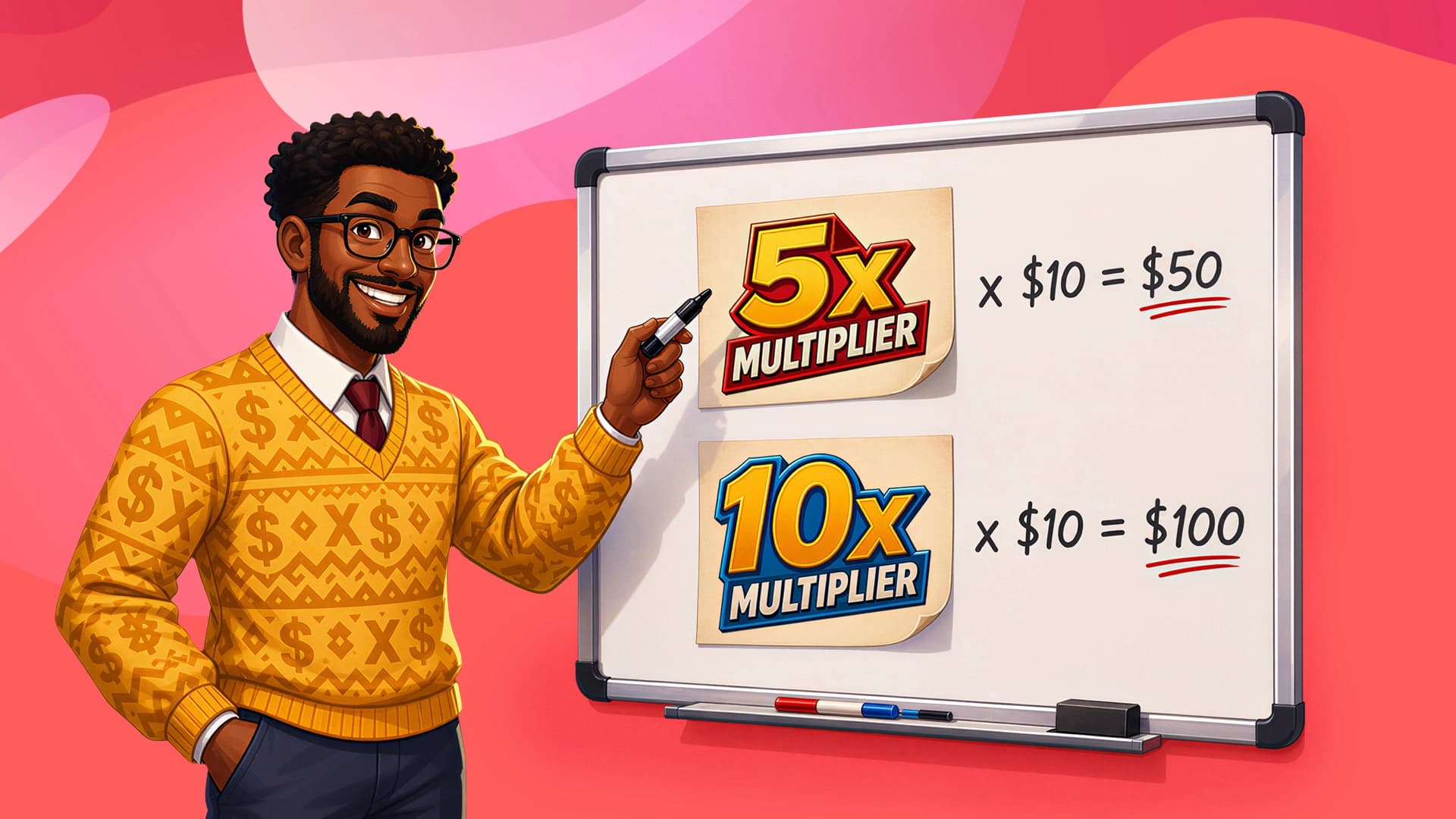
- Suppose an eight-symbol cluster pays 5x the total bet. At a $0.20 bet, that cluster pays $1.
- If a 3x multiplier applies to that cluster, its payout becomes $3.
- Any other qualifying clusters or subsequent cascade wins are calculated under the game’s rules and added to the spin’s total.
The multiplier’s scope matters. It might apply to one cluster, symbols in particular cells or a wider sequence of wins.
A slot multiplier changes the payout it applies to, not the game’s requirement for a qualifying win.
How Cascading Reels Work with Cluster Pays
Cascading reels describe what happens after a win: winning symbols disappear and new symbols fall into the gaps. If the new symbols form another qualifying cluster, another win registers.
Cluster pays and cascades are commonly paired because removing a group can bring other matching symbols together.
They are still separate features: cluster pays defines a winning group, while cascading reels describes how the grid changes afterward.
Some games also merge or upgrade symbols instead of simply removing every winning symbol. Win Up is one example of that variation.
Cluster Pays vs Paylines, Payways and Scatter Pays
| Format | How a win forms | Where symbols must land | Layout examples |
| Paylines | Matching symbols follow a preset winning path | In the positions along an active line | 5×3 is one common layout |
| Payways | Matching symbols appear on qualifying consecutive reels | Usually any row on those reels | A 5×3 game can have 243 ways |
| Cluster Pays | Enough matching symbols form a connected group | Touching according to the game’s adjacency rule | Win Up: 6×6; King of Africa: 7×7 |
| Scatter Pays / Anywhere Pays | Enough matching symbols appear anywhere | No connected group or preset path required | Grid size varies by game |
The distinction between payways and paylines is about preset paths versus matching across reels. Cluster pays adds a different condition: the symbols must connect to one another on the grid.
Candyland Bonanza and Ancient Aztec Bonanza illustrate the anywhere-pays alternative.
Their matching symbols do not need to form an adjacent group. They may have refills, but that does not make them Cluster Pays games.
Grid Sizes and Adjacency Rules
Cluster pays games commonly use larger grids. Win Up has a 6×6 grid with 36 positions; King of Africa has a 7×7 grid with 49. A 5×3 layout, by comparison, contains 15 positions.
A larger grid provides more positions in which symbols can connect, but it does not by itself tell you how often the game pays. The number of matching symbols required and the way those symbols are distributed matter too.
Common Features in Cluster Pays Games

These features can change how a cluster game plays, but none is required in every title:
- Cascading reels: winning symbols disappear and new ones fall in, potentially creating another win within the same paid spin.
- Building multipliers: multipliers can increase during a sequence of wins or a bonus round, with reset rules that depend on the game.
- Sticky multipliers: multiplier symbols or marked cells can remain active for later wins during a feature.
- Wilds: some games use Wilds to help complete or extend a cluster; others, including Win Up, do not.
- Feature meters: winning symbols can contribute to a progress bar that activates another feature at a set point.
These slot features are not exclusive to cluster games. It is their combination with connected-symbol wins that changes the experience.
RTP and Volatility in Cluster Pays Slots
RTP and volatility are set at game level. The cluster pays format does not determine either value.
Slot RTP describes a theoretical long-run return, while volatility concerns variation in results. A big grid or a high minimum cluster size is not enough to tell you either one.
Cluster Pays Games to Try
Win Up

Win Up uses a 6×6 grid where four or more matching gems form a winning cluster. Some symbols disappear after a win while others upgrade, working through nine symbol levels.
The free-spins bonus adds a separate marked-cell system. Further wins in those cells build multipliers up to 128x.
Symbol upgrades raise the value of the gems; the bonus-cell multipliers increase the wins that land in those positions.
King of Africa
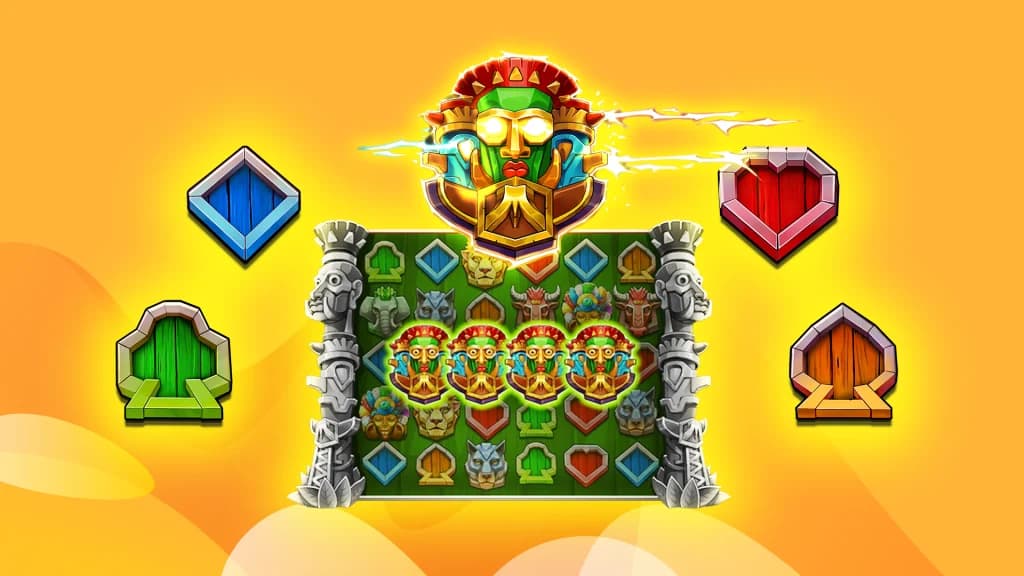
King of Africa uses a 7×7 cluster grid with refilling symbols and a progress meter. Each symbol in a winning combination adds a point.
Every 25 points activates another feature; at 100 points, the Totem feature introduces a 3×3 Giant Wild.
The Giant Wild changes form over subsequent refills. Unlike Win Up’s symbol-upgrading system, the focus here is on clusters feeding the meter and activating changes to the board.
What to Check Before Playing a Cluster Pays Slot
- Minimum cluster size: how many matching symbols must connect for a win.
- Adjacency rule: whether only horizontal and vertical connections count, or diagonals count too.
- Grid and symbol changes: the layout, how winning symbols are removed, and whether any merge or upgrade.
- Multiplier rules: what a multiplier applies to, how it grows and when it resets.
- RTP and volatility: the values for the individual game, not assumptions based on the format.
- Maximum win: the overall limit and how it is expressed, including whether it is a multiple of the total bet.
More About Cluster Pays Slots
What are cluster pays in slots?
A win system where enough matching symbols form a connected group on the grid, usually through horizontal and vertical connections. The group does not need to follow a fixed payline.
How many matching symbols make a cluster win?
There is no universal number. Win Up starts at four matching symbols; other games use different thresholds. The game’s cluster-size rules determine whether a group is large enough to pay.
Are Cluster Pays and cascading reels the same thing?
No. Cluster pays defines how a win forms. Cascading reels describes what happens after a win, when symbols disappear and replacements arrive. Games can combine the two, but an anywhere-pays game can also have cascades without requiring adjacent clusters.
What is the difference between Cluster Pays, paylines and payways?
Paylines use preset winning paths. Payways use matching symbols on qualifying consecutive reels. Cluster pays uses connected symbol groups on a grid. None of those labels alone tells you a game’s RTP or volatility.